
Buying a Puppy in Abu Dhabi & Sharjah: Rules, Microchipping & Vets

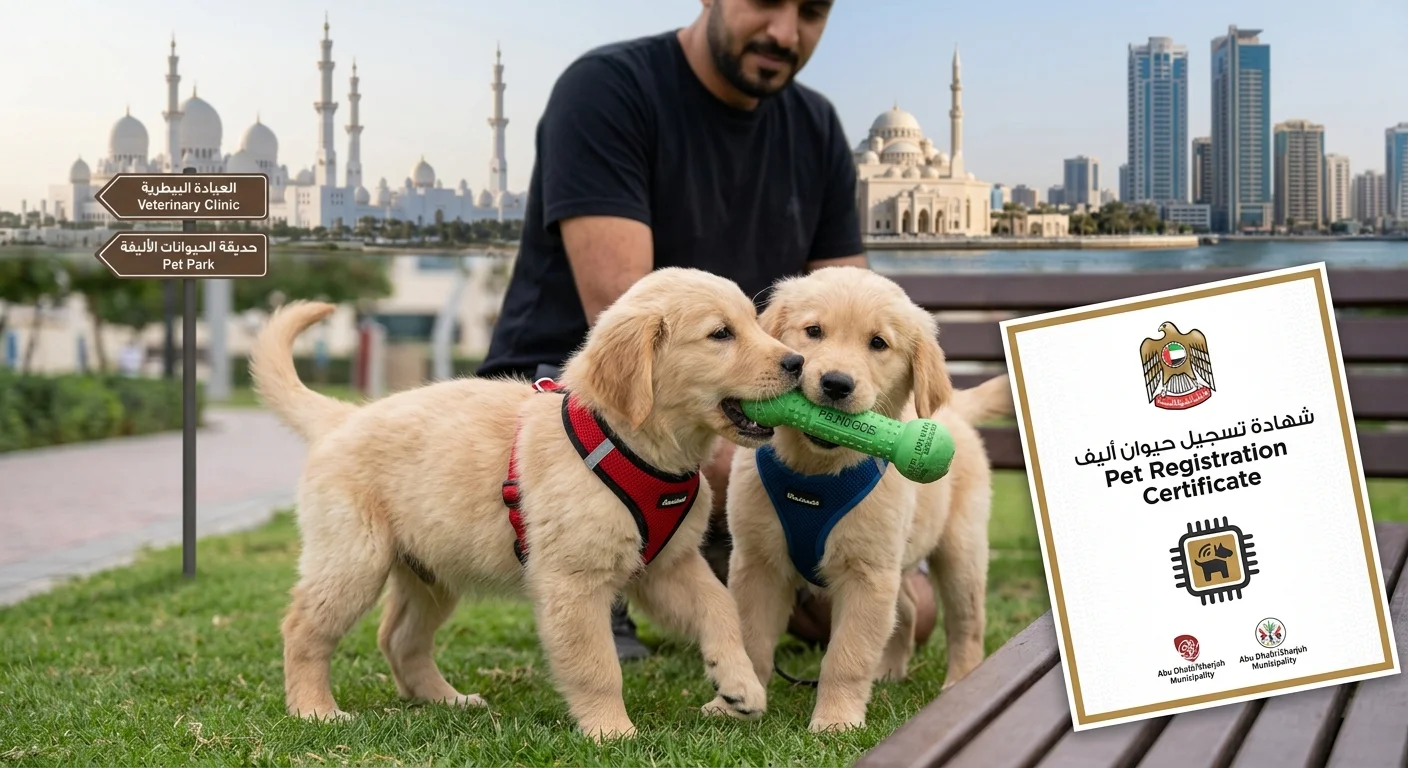
Searching for puppies for sale Abu Dhabi can involve much more than choosing a puppy and arranging a pickup. For residents of Abu Dhabi and Sharjah, responsible puppy ownership also means understanding the local procedures that apply after acquiring the animal, including identification, registration, vaccinations, veterinary records, and the practical requirements for moving with a dog between emirates.
The United Arab Emirates has veterinary and animal-welfare requirements at both federal and emirate levels. Abu Dhabi, in particular, has introduced a centralized pet-ownership registration system for cats and dogs with electronic identification, while Sharjah has its own municipal framework and veterinary infrastructure. Federal requirements also become important whenever a puppy is imported into the UAE or transported internationally.
For a buyer comparing puppies for sale Abu Dhabi, these procedures are important because the puppy should not be viewed as a purchase alone. The ownership process continues with a veterinary examination, appropriate vaccinations, permanent identification, documentation, and access to ongoing veterinary care.
This guide focuses specifically on Abu Dhabi and Sharjah. It explains what buyers should know about municipal procedures, microchipping, vaccination records, veterinary visits, registration, and movement between the two emirates.
read more about puppies cost
Understanding Local Puppy Ownership Requirements
Why local compliance matters
A puppy becomes the responsibility of its owner as soon as ownership is transferred. That responsibility includes maintaining the animal’s health records, following applicable identification and registration requirements, and ensuring that the dog is kept in a manner consistent with local animal-control and welfare rules.
Abu Dhabi’s Department of Municipalities and Transport has specifically encouraged owners to register cats and dogs through its animal-ownership services. The system connects microchipped animals with their owners in a centralized database, with veterinary facilities playing an important role in registration.
For buyers, this means that asking whether a puppy has received veterinary care is only part of the process. It is also useful to ask for documentation showing vaccinations, identification, and any previous veterinary treatment.
What a buyer should request from the seller
Before taking a puppy home, the buyer should ask for all available veterinary documentation rather than relying only on verbal information.
Important records can include:
- The puppy’s vaccination record.
- Rabies vaccination information when applicable.
- Microchip identification information.
- Veterinary examination records.
- Deworming records.
- Previous treatment records.
- The date of birth or estimated date of birth.
- The seller’s ownership or transfer documentation where applicable.
- Any health certificate supplied by the seller or veterinarian.
The exact documentation needed can vary depending on whether the puppy is already resident in the UAE, has been imported, or is being transferred from another owner.
Checking the puppy before completing ownership
A veterinary examination can be useful even when the puppy appears healthy.
A veterinarian can assess the puppy’s general condition and review its vaccination history, parasite-control records, and identification status. If a microchip is already present, the veterinarian can also scan it and confirm the identification number.
This is particularly useful when the puppy is being transferred between people because it creates an opportunity to establish an accurate veterinary record under the new owner’s details.
Abu Dhabi Pet Registration
Abu Dhabi’s centralized animal ownership system
Abu Dhabi introduced an animal-ownership registration service designed to create a centralized database connecting owners with their microchipped cats and dogs.
The Department of Municipalities and Transport announced that the service was available through TAMM and that veterinary facilities would play a central role in registering animals. The same announcement highlighted annual vaccinations, microchipping, and regular veterinary examinations as important elements of responsible ownership.
For someone purchasing a puppy in Abu Dhabi, registration should therefore be considered part of the ownership process rather than an optional administrative detail.
How registration is connected to the microchip
A microchip provides the permanent identification number associated with the animal. Registration then connects that identification to ownership information.
This distinction is important because a microchip by itself is not the same thing as complete registration.
When visiting a veterinary clinic, the owner should ask the clinic to verify:
- Whether the puppy already has a microchip.
- The identification number recorded by the chip.
- Whether the chip can be read correctly.
- Whether the animal’s veterinary records match the chip number.
- Whether the ownership information has been registered or needs to be updated.
Registering after purchasing a puppy
When acquiring a puppy that already has a microchip, the buyer should clarify how the ownership information will be transferred.
Abu Dhabi’s registration framework also recognizes the role of establishments in registering animals and transferring ownership where relevant.
This makes it useful to establish the transfer process before the puppy changes hands. Keeping the previous owner’s information attached to the animal can create administrative complications if the dog is later lost, transported, treated, or transferred again.
Registration through a veterinary clinic
Veterinary clinics are an important part of Abu Dhabi’s registration system. The Department of Municipalities and Transport has explained that owners can visit their chosen veterinary facility to register cats and dogs, while establishments can also perform registration and ownership-transfer functions where applicable.
For a new puppy owner, combining the first veterinary examination with the registration process can be practical because the veterinarian can check the animal’s identification and health documentation during the same visit.
Microchipping Puppies in Abu Dhabi and Sharjah
What is a pet microchip?
A pet microchip is a small identification device implanted beneath the animal’s skin. It contains a unique identification number that can be read with an appropriate scanner.
It is not a GPS tracker. A conventional identification microchip does not continuously transmit the puppy’s location.
Its main purpose is permanent identification. If a lost dog is taken to a veterinary facility or another authorized animal-care organization, the chip can potentially help identify the animal and connect it with the registered owner.
Why microchipping is important
Microchipping can help solve several practical ownership problems.
For example, a puppy may escape from the home, become separated from its owner during transportation, or be found without its collar. A collar can be removed or lost, while a properly implanted microchip remains with the animal.
For owners in Abu Dhabi, microchipping is particularly relevant because the local registration system is based on connecting registered animals and their owners through electronic identification.
How the microchipping process works
The process is generally straightforward at a veterinary clinic.
A veterinarian or trained veterinary professional:
- Scans the puppy to check whether a chip is already present.
- Confirms the existing chip number if one is detected.
- If no chip exists, inserts an appropriate identification microchip beneath the skin.
- Scans the new chip after implantation.
- Records the identification number in the veterinary documentation.
- Connects the identification information with the animal’s registration record when the relevant registration process is completed.
The important point is consistency. The number recorded in the veterinary file, vaccination documentation, and registration information should correspond to the actual chip implanted in the puppy.
Microchipping imported puppies
Federal UAE requirements are particularly important if the puppy is being brought into the country from abroad.
The Ministry of Climate Change and Environment’s pet-import service states that imported cats and dogs must have a permanent electronic identification chip and that the microchip number must correspond with the number recorded in the relevant health documentation.
This is different from buying a puppy that is already legally resident in the UAE. Buyers should therefore determine where the puppy originated before assuming that only local registration is involved.
Vaccinations for Puppies
Why vaccination records matter
Vaccination is one of the first things a buyer should review when taking ownership of a puppy.
A vaccination record provides evidence of which vaccines the puppy has received, the dates they were administered, and when further doses or boosters may be due.
The veterinarian should review the puppy’s history rather than relying solely on the seller’s statement that the puppy has been vaccinated.
Rabies vaccination
Rabies vaccination has particular importance in the UAE’s veterinary and animal-movement requirements.
For imported dogs, the UAE’s federal requirements specify rabies vaccination, with the first vaccination not being administered before the animal reaches 12 weeks of age.
The precise vaccination schedule for a puppy living locally should be established with a licensed veterinarian based on age, previous vaccination history, health status, and applicable local requirements.
Core puppy vaccinations
The UAE federal pet-import requirements identify several dog vaccinations in addition to rabies, including protection against canine distemper virus, canine parvovirus, infectious canine hepatitis, and leptospirosis, subject to the conditions specified by the ministry.
For a locally purchased puppy, the veterinarian should determine which vaccinations have already been given and which are still needed.
Why buyers should not rely on a single vaccination sticker
A vaccination sticker without supporting information may not provide enough context.
A good veterinary record should make it possible to identify relevant information such as:
- Vaccine name.
- Date of vaccination.
- Animal identification.
- Vaccine manufacturer where applicable.
- Batch information where required.
- Veterinary clinic information.
- Next recommended vaccination or booster date.
This becomes especially important if the puppy will later travel, change owners, or require treatment at another clinic.
First Veterinary Visit After Buying a Puppy
When to arrange the first checkup
A new owner should arrange a veterinary examination soon after acquiring a puppy.
The appointment gives the veterinarian an opportunity to establish a baseline health record and review the documents provided by the seller.
The vet can also determine whether the puppy’s vaccination and parasite-control program needs to be continued or adjusted.
What the veterinarian should check
A routine puppy examination can include an assessment of:
- General physical condition.
- Weight and growth.
- Eyes and ears.
- Mouth and teeth.
- Skin and coat.
- Heart and respiratory function.
- Abdomen.
- Musculoskeletal condition.
- Parasite exposure.
- Vaccination history.
- Microchip status.
The exact examination depends on the puppy’s age and circumstances.
Bring the puppy’s documents
The buyer should take every available record to the first appointment.
This includes the vaccination card, microchip documentation, previous medical records, and any documents received from the seller.
Having complete information helps the veterinarian avoid unnecessary uncertainty about the puppy’s medical history.
Veterinary Care Infrastructure in Abu Dhabi
Choosing a regular veterinary clinic
A regular veterinary clinic should be more than a place visited only when a puppy becomes sick.
A useful clinic should be able to support routine preventive care, vaccinations, parasite management, identification, general examinations, and documentation.
Some Abu Dhabi clinics also provide emergency care or additional services, which can be useful when an owner wants to keep most of the dog’s veterinary history within one healthcare provider.
Examples of veterinary clinics in Abu Dhabi
Among the currently listed veterinary facilities in Abu Dhabi are:
- Vet Zone Veterinary Clinic in Al Bateen.
- Pawspact Veterinary Clinic in Al Hisn.
- Wellpet Veterinary Clinic in Al Nahyan.
- Horus Veterinary Clinic in Al Nahyan.
- Welfare Veterinary Clinic in the Muroor Road area.
- Capital Vet Clinic in Al Nahyan.
- Canadian Vet Clinic in Al Khalidiyah.
Services vary between clinics, so owners should confirm directly whether a specific clinic currently provides microchipping, Abu Dhabi registration assistance, vaccination appointments, emergency care, or travel documentation before visiting.
What to ask a clinic before booking
A puppy owner can save time by asking a few questions before the appointment:
- Do you provide puppy vaccinations?
- Can you scan and implant microchips?
- Can you assist with Abu Dhabi pet registration?
- Can you update ownership information?
- Do you issue vaccination documentation?
- Do you provide health certificates for travel?
- Is emergency care available?
- What documents should I bring?
These questions are particularly useful when buying a puppy that has incomplete records.
Veterinary Care Infrastructure in Sharjah
Sharjah’s veterinary network
Sharjah has a broad network of private veterinary facilities serving dogs and other companion animals.
The Sharjah City Municipality maintains municipal services and regulations for the emirate, while veterinary clinics provide much of the practical day-to-day care required by individual pet owners.
Because procedures and available services can change, owners should confirm current requirements with Sharjah Municipality or the veterinary clinic handling the puppy’s care.
Examples of veterinary clinics in Sharjah
Current veterinary listings include facilities such as:
- VetPulse Veterinary in Muwaileh Commercial.
- Canadian Veterinary Clinic in Al Mareija.
- ZAD Veterinary Clinic in Al Jubail.
- Hub Vet Clinic in Muwaileh Commercial.
- The Greenline Vet Clinic in Al Jubail.
- Turkish Vet Clinic in Hay Hoshi.
- Alef & Aneq Veterinary Clinic in Muwaileh Commercial.
Different clinics specialize in different combinations of routine care, emergency services, diagnostics, grooming, boarding, and other veterinary services. A puppy owner should verify the exact service required before making an appointment.
Selecting a clinic for ongoing puppy care
Instead of choosing a clinic based only on proximity, consider whether it can maintain a consistent medical record for the puppy.
Useful factors include:
- Availability of routine appointments.
- Vaccination services.
- Microchipping.
- Access to diagnostic testing.
- Emergency arrangements.
- Veterinary documentation.
- Communication with owners.
- Location relative to the home.
- Opening hours.
The most practical clinic is often one that can continue supporting the puppy as it grows rather than handling only one isolated appointment.
read more about teacup puppies for sale
Sharjah Pet Ownership and Municipal Considerations
Checking current municipal requirements
Sharjah’s municipal framework should be checked directly when dealing with ownership procedures because local services and administrative requirements can change.
The official Sharjah Municipality platform provides access to municipal services and regulations, while the Department of Municipal Affairs in Sharjah oversees and supports municipal work and local regulatory systems across the emirate.
This is especially important when a buyer is moving into Sharjah with a dog that was previously registered or treated in another emirate.
Keep documentation organized
A Sharjah dog owner should keep a dedicated file containing:
- Vaccination records.
- Microchip number.
- Veterinary invoices and medical records.
- Registration information where applicable.
- Ownership documents.
- Travel or health certificates when relevant.
Maintaining these documents digitally as well as physically can make future veterinary visits and transportation easier.
Housing and neighborhood considerations
Pet ownership also involves respecting building, community, and public-health requirements.
Owners should check the rules that apply to their particular residential building or community and ensure that the dog does not create nuisance or safety problems for neighbors.
This is not simply an administrative issue. Responsible ownership includes controlling the dog in public areas, maintaining hygiene, and preventing situations that could affect other residents.
Moving a Puppy Between Abu Dhabi and Sharjah
Is moving between emirates the same as importing a dog?
Moving a dog from Abu Dhabi to Sharjah, or from Sharjah to Abu Dhabi, is not the same as importing a dog from another country.
Federal import procedures primarily apply when animals enter the UAE from outside the country. The UAE Ministry’s import service includes requirements such as an import permit, veterinary health documentation, vaccination records, and permanent identification for imported cats and dogs.
For ordinary domestic movement between emirates, owners should instead make sure that the dog’s local identification, vaccination records, ownership information, and any applicable municipal requirements are current.
Carry the dog’s records
When transporting a puppy between Abu Dhabi and Sharjah, it is sensible to keep the dog’s veterinary documentation available.
The records can help if the puppy needs veterinary treatment during the trip, becomes lost, or requires verification of its vaccination or identification status.
Use safe transportation
The puppy should be transported in a manner that prevents escape and protects it from injury.
For car travel, an appropriate secured carrier or restraint should be used. The puppy should not be allowed to move freely around the vehicle.
The owner should also avoid leaving a puppy unattended in a parked vehicle, particularly in hot weather.
What if the puppy is being permanently relocated?
If the puppy is changing its residence from one emirate to another, the owner should review the registration information and confirm whether any ownership or address information needs to be updated.
For Abu Dhabi-registered pets, the centralized animal ownership system makes accurate owner information particularly important.
Buying a Puppy That Came From Outside the UAE
Imported puppies require additional checks
A puppy advertised locally may have originated outside the UAE. This makes it important to establish whether the puppy has already completed the relevant import process.
The UAE’s federal requirements specify that imported cats and dogs must have permanent electronic identification and appropriate health and vaccination documentation.
A buyer should therefore ask whether the puppy was:
- Born in the UAE.
- Imported from another country.
- Previously owned by another UAE resident.
- Recently brought into the UAE.
Check the microchip against the documents
For imported animals, the federal requirements specifically require the microchip number to correspond with the identification information in the health documentation.
This is a simple but important check before accepting ownership.
Check the vaccination timeline
Imported puppies have specific health and vaccination requirements. The federal rules include minimum ages and vaccination conditions, as well as parasite-treatment requirements before shipment.
If a seller cannot provide the relevant documentation, the buyer should have the puppy assessed by a licensed veterinarian before assuming that all requirements have been satisfied.
Federal Requirements That Can Affect Abu Dhabi and Sharjah Owners
When federal rules become relevant
Local ownership and municipal procedures are only part of the picture.
Federal rules become particularly important when a puppy is:
- Imported into the UAE.
- Exported from the UAE.
- Returning to the UAE after international travel.
- Passing through the UAE as a transit animal.
The federal Ministry’s pet-import service sets out documentation, identification, vaccination, and health requirements for these situations.
Returning to the UAE with a resident dog
The federal requirements also address resident cats and dogs that leave the UAE and later return.
The animal must have the appropriate identification and documentation, and its rabies vaccination must remain valid for the return journey. If the vaccination has expired, the animal may be treated under the requirements applicable to a first-time import.
This makes it important to check travel requirements before leaving the country rather than waiting until the return date.
Abu Dhabi Rules for Taking Dogs Outside the Home
Public control and responsible handling
Local animal-control regulations are relevant when dogs are taken outside the home.
Older Abu Dhabi municipal guidance emphasized keeping dogs under control outside the home, including the use of an appropriate collar or lead and additional control measures in circumstances involving large or potentially dangerous dogs.
Because regulations and permitted locations can change, owners should verify the current rules before taking a dog into a particular public facility.
Pet-friendly venues in Abu Dhabi
Abu Dhabi updated its regulations in December 2025 to allow licensed tourism establishments such as certain hotels and tourist restaurants to welcome companion animals under specified conditions. The amendments identify companion animals such as cats and dogs and allow participating establishments to designate appropriate areas for them.
This does not mean that dogs are automatically permitted in every restaurant, hotel, shopping center, beach, or public facility.
The practical rule for owners is to check the policy of the specific venue before arriving.
Keeping a Puppy Healthy After Registration
Registration is not a substitute for veterinary care
A registered puppy still needs routine veterinary attention.
Registration identifies the animal and connects it with ownership information, but it does not replace vaccination, parasite control, physical examinations, or treatment when illness occurs.
Maintain vaccination reminders
Owners should maintain a record of the next vaccination or booster date.
Abu Dhabi’s DMT has specifically highlighted annual vaccinations and regular veterinary checkups within its pet-ownership framework.
The precise schedule for an individual puppy should be established by its veterinarian.
Keep the microchip information current
If the owner changes address, telephone number, or other registration information, the relevant records should be updated.
A microchip is most useful when its associated owner information is accurate.
Keep the veterinary relationship consistent
Using the same clinic for routine appointments can make it easier to maintain a complete medical history.
However, owners should also know where an emergency veterinary service is available in case the regular clinic is closed.
A Practical Checklist for Buyers Searching for Puppies for Sale Abu Dhabi
Before purchasing
Before paying for a puppy, confirm:
- The puppy’s approximate age.
- Where the puppy was born.
- Whether it has already been imported into the UAE.
- Whether a microchip is present.
- Whether the chip can be scanned.
- Which vaccinations have been administered.
- Whether vaccination records are available.
- Whether deworming and parasite-control records are available.
- Whether the puppy has received a veterinary examination.
- What ownership documents will be transferred.
At the first veterinary appointment
Ask the veterinarian to:
- Perform a general health examination.
- Scan the microchip.
- Review the vaccination record.
- Determine the appropriate vaccination schedule.
- Review parasite-control history.
- Confirm the identification information.
- Explain registration requirements.
- Create or update the puppy’s medical record.
If you live in Sharjah
Check the current Sharjah municipal requirements relevant to your residence and ask your chosen veterinary clinic which identification, vaccination, or documentation procedures it can handle.
The official Sharjah Municipality platform is the appropriate reference for current municipal services and regulations.
If you live in Abu Dhabi
Confirm that the puppy is properly identified and registered through the applicable Abu Dhabi animal-ownership system.
The Abu Dhabi DMT has stated that veterinary facilities are involved in registration and ownership-transfer processes and that the system is designed to connect owners with microchipped animals.
read more about cheap puppies for sale in dubai
Buying a puppy in Abu Dhabi or Sharjah should be treated as the beginning of an ownership process rather than the end of a purchase.
For someone searching for puppies for sale Abu Dhabi, the essential steps are to verify the puppy’s origin, examine its veterinary documentation, confirm its vaccination history, check whether it has a permanent microchip, and arrange a veterinary examination after acquisition.
In Abu Dhabi, owners should pay particular attention to the animal-ownership registration system connecting microchipped cats and dogs with their owners. Veterinary clinics have an important role in registration and ownership-transfer procedures.
In Sharjah, owners should consult the current municipal services and regulations and work with a licensed veterinary clinic for routine medical care, vaccinations, identification, and other veterinary needs. The municipal framework can change, so checking the current official service information is preferable to relying on older pet-ownership advice.
For both emirates, maintaining accurate records is one of the simplest ways to make puppy ownership easier. Keep the microchip number, vaccination history, veterinary records, and ownership information together and update them whenever circumstances change.
If the puppy will travel outside the UAE, additional federal requirements become relevant. The UAE’s federal veterinary framework specifies requirements involving microchips, vaccinations, health certificates, and import or return procedures for cats and dogs.
The practical goal is therefore straightforward: verify the puppy before purchase, establish veterinary care immediately afterward, complete the applicable identification and registration procedures, keep vaccinations current, and check the relevant rules whenever the dog’s residence or travel situation changes.
This approach helps buyers searching for puppies for sale Abu Dhabi move from the initial purchase to properly documented, organized, and locally compliant pet ownership in Abu Dhabi or Sharjah.